


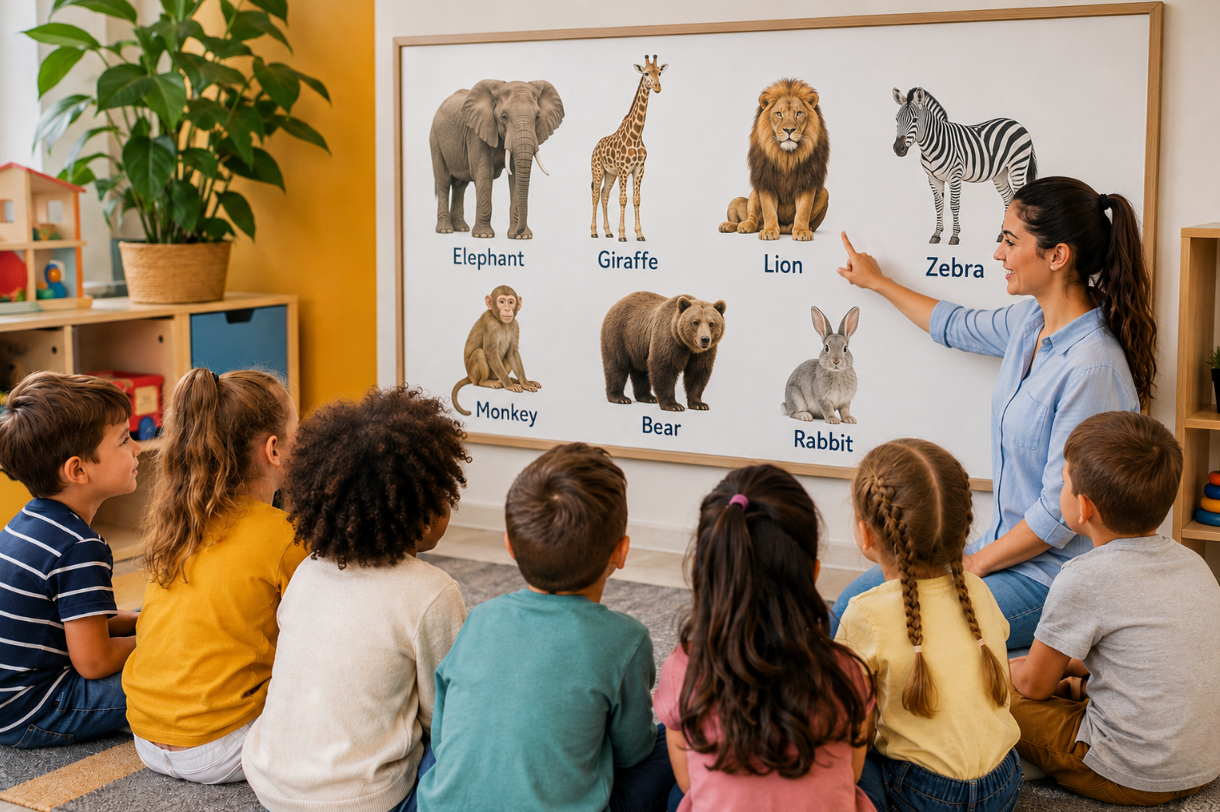
Simple activities help young children learn by giving them chances to talk, move, create, solve small problems, and practice being with others.
Reading, counting, singing, drawing, pretend play, and taking turns can make learning feel natural at home and during care.
At Gwen’s Little Treasures Childcare, we believe children are more willing to join activities when they feel welcomed, supported, and comfortable at the center. Young children do not always need complicated lessons to learn. Many times, they learn through simple moments, familiar routines, and caring guidance.
Why Do Simple Activities Help Children Learn?
Simple activities help children learn because they let children talk, move, make choices, solve small problems, and practice sharing with others. These everyday moments can make learning feel natural for young children.
Children learn by doing. They touch, ask, repeat, copy, build, move, listen, and try again. A child who stacks blocks is working with balance and hand control. A child who sings a song is hearing rhythm and words. A child who waits for a turn is practicing patience and awareness of others.
These activities do not need to feel like schoolwork. A short story, a simple song, a cleanup routine, or a game of naming colors can all give children a chance to learn.
Parents can support this by keeping activities short, calm, and age-appropriate. Children often respond better when learning feels like play, not pressure.
Reading, Talking, and Storytelling
Reading and storytelling give children a chance to hear new words, follow simple ideas, and enjoy a calm shared activity. Even a few minutes with a book can help children slow down, look closely, and hear language in a warm setting.
Parents do not need a long reading session. A short book, a familiar story, or a few picture pages can be enough. What matters most is the interaction.
You can try simple ideas like:
- Pointing to pictures and naming what you see
- Asking, “What do you think happens next?”
- Letting your child turn the pages
- Repeating favorite lines
- Asking your child to describe a picture
- Telling a short story about the day
Talking also matters. Children hear language during simple routines, such as getting dressed, eating breakfast, cleaning up toys, or riding in the car.
You might say, “First we put on your shoes, then we go to the center,” or “Let’s count the cups on the table.” These small conversations help children hear new words and use them during everyday routines.
Counting, Sorting, and Naming
Counting, sorting, and naming everyday objects give children a simple way to notice patterns, compare items, and use new words. These activities can happen during play, cleanup, meals, or regular routines.
Parents can use items already at home. Toys, socks, blocks, spoons, crayons, and snacks can all become part of a simple learning activity.
Helpful examples include:
- Counting blocks while stacking them
- Sorting toys by color
- Matching socks
- Naming shapes in a room
- Comparing big and small objects
- Grouping items by type
- Counting steps while walking
Children do not need formal lessons to practice noticing, naming, and organizing the world around them.
During cleanup, you might say, “Let’s put all the red blocks here,” or “Can you find two cars?” These small prompts help children think while still enjoying play.
Music, Movement, and Hands-On Play
Music and movement give children a chance to listen, move their bodies, follow simple directions, and enjoy rhythm. Hands-on play also gives children room to explore, create, and use their imagination.
Young children often enjoy learning when their bodies are involved. They may clap, dance, jump, march, or copy simple motions. These activities can help children listen and respond in a playful way.
Simple movement ideas include:
- Singing a song with hand motions
- Playing freeze dance
- Clapping a pattern
- Marching around the room
- Following simple directions like “jump,” “turn,” or “stop”
- Dancing to a favorite song
Hands-on play is also helpful because children can use their senses and creativity. Drawing, building, stacking, shaping, and simple crafts can all give children time to explore.
Parents can offer crayons, paper, blocks, puzzles, or safe household items for sorting and stacking. For young children, trying, exploring, and creating matter more than making something look perfect.
Pretend Play and Taking Turns
Pretend play gives children room to use language, imagination, sharing, and simple social roles. It also gives children a safe way to act out what they see in daily life.
Children may pretend to cook, care for a doll, shop at a store, drive a bus, or help a stuffed animal. These moments may look simple, but they give children practice using words, making choices, and understanding routines.
Pretend play can also support social skills. When children play with others, they may practice:
- Sharing toys
- Waiting for a turn
- Asking for help
- Using kind words
- Listening to another child’s idea
- Joining a group activity
Parents can support pretend play by asking simple questions. For example, “What are you making?” or “Who is coming to your pretend store?” Questions like these invite children to use language without turning play into a lesson.
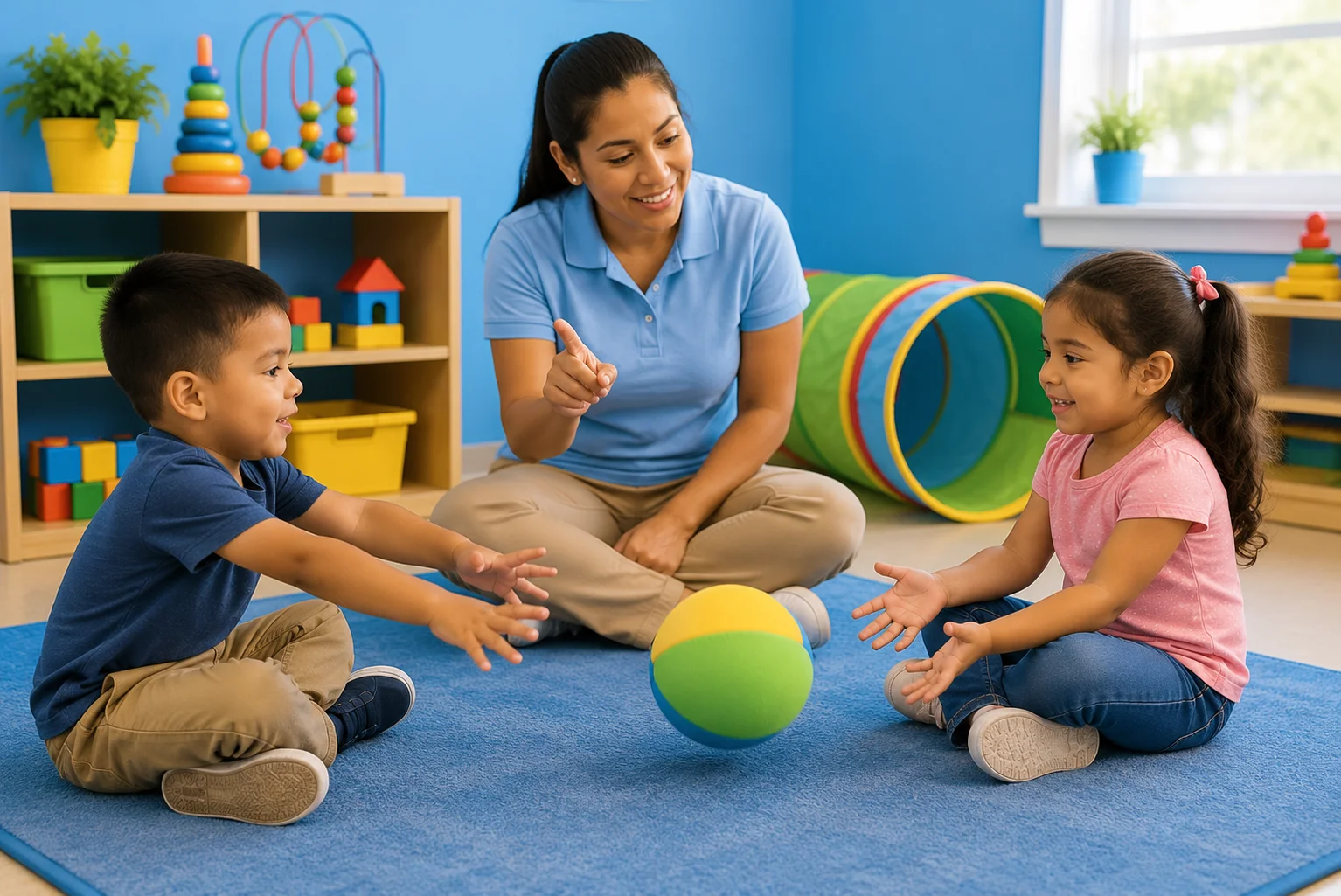
At a childcare center, pretend play and group activities can also give children chances to interact with peers. These moments help children practice being part of a group in a gentle, age-appropriate way.
Simple Learning Activities Parents Can Try
Parents can support learning at home with short activities that fit naturally into the day. These ideas do not require special materials or long planning.
Here are simple activities parents can try:
- Read one short book together.
- Count toys while cleaning up.
- Sort socks, blocks, or crayons by color.
- Sing a simple song with hand motions.
- Let your child draw freely.
- Ask your child to name what they see.
- Practice taking turns during play.
- Talk about what happens next in the day.
- Let your child help with simple routines.
- Play pretend with dolls, cars, stuffed animals, or toy food.
- Ask simple questions during walks, meals, or playtime.
These activities can be done in small moments. A few minutes of reading, counting, singing, or talking can still be meaningful.
Parents do not have to turn every moment into a lesson. Children can learn through simple routines when adults talk with them, listen, and give them chances to try.
How a Childcare Center Can Support Learning

A childcare center can support learning by giving children chances to follow routines, join activities, socialize with peers, and receive caring guidance. A comfortable setting can help children feel more ready to take part.
At Gwen’s Little Treasures Childcare, our focus includes providing a comfortable learning environment where children can freely learn and socialize with their peers. This matters because young children often learn through relationships, repetition, and familiar routines.
Our childcare programs help families see how daily care, routines, activities, and social time can support their child’s experience at the center.
Children may have opportunities to listen, play, move, create, share, and join group activities during the day. These moments give children practice with skills they can use in everyday life.
A center can also help children build comfort with structure. Daily routines may include arrival, meals, activities, rest or quiet time, social play, and pickup. When children begin to understand the flow of the day, they may feel more settled.
What Should Parents Look for in Learning Activities?
Parents should look for activities that feel age-appropriate, safe, engaging, and connected to everyday learning. Good activities for young children should invite curiosity without putting too much pressure on the child.
Children do not need every moment to be structured. They need time to explore, play, ask questions, and repeat activities. Repetition is often how young children practice and become more comfortable.
Parents can look for activities that include:
- Simple instructions
- Safe materials
- Room for creativity
- Movement and hands-on play
- Conversation
- Sharing and turn-taking
- A calm adult nearby
- Time for the child to try again
Activities, routines, and social interaction are helpful details parents can think about when choosing a childcare provider for their family.
The best activities often feel simple. A child naming colors, building with blocks, singing a song, or pretending to cook may be practicing more than one skill at the same time.
How Parents and Childcare Staff Can Work Together
Parents and childcare staff can work together by sharing what a child enjoys, what helps them feel comfortable, and what routines are familiar at home. This helps adults support the child more consistently.
Parents know their child best. They may know which songs their child loves, what activities hold their attention, or what helps them calm down. Sharing those details can help staff better understand the child’s personality and interests.
Parents can tell staff things like:
- “She likes picture books about animals.”
- “He enjoys building with blocks.”
- “She gets shy in groups at first.”
- “He likes songs with hand motions.”
- “She feels proud when she helps clean up.”
These small details can help staff guide the child during the day. They can also help families feel more connected to what happens while their child is at the center.
When parents and staff communicate, children receive support from both sides. That partnership can make routines and learning moments feel more familiar.
Frequently Asked Questions About Learning Activities for Young Children
What activities help young children learn?
Simple activities like reading, counting, sorting, singing, drawing, pretend play, and taking turns can help children practice language, thinking, movement, creativity, and social skills.
How can parents support learning at home?
Parents can support learning through short daily moments, such as reading a book, counting toys, naming colors, singing songs, talking during routines, and letting children help with simple tasks.
How can childcare support early learning?
Childcare can support early learning by giving children chances to follow routines, join activities, socialize with peers, and receive caring guidance during the day.
Final Thoughts
Young children can learn through simple activities that feel natural, playful, and connected to daily life. Reading, counting, music, drawing, pretend play, and social interaction can all give children chances to practice new skills in a gentle way.
At Gwen’s Little Treasures Childcare, we value activities that help children feel comfortable, supported, and included as they learn and socialize with others.
If you want to see how your child may learn, play, and feel comfortable at our center, you may schedule a tour today.


Leave a Reply