


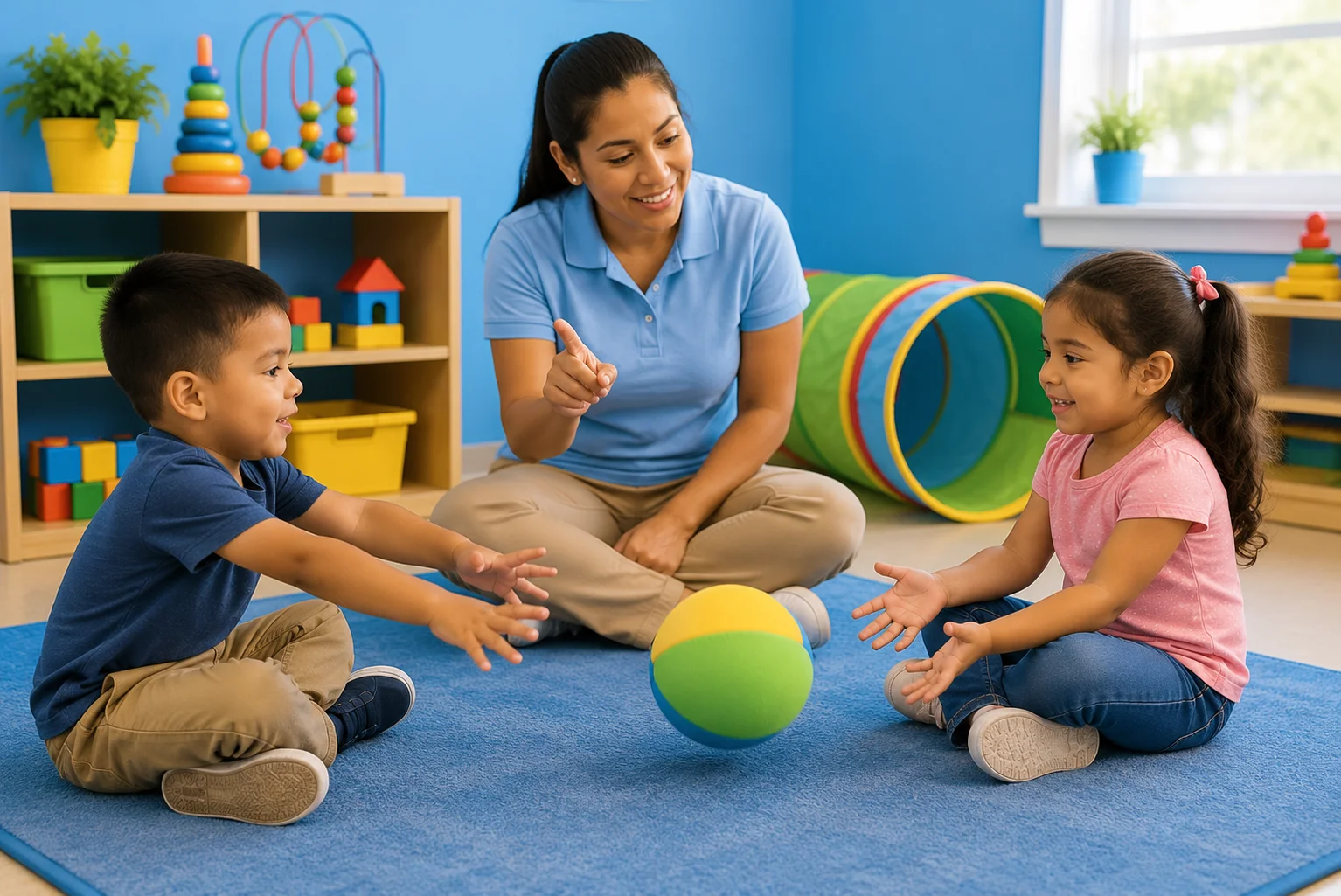
Rolling a ball, building a tower, or completing a puzzle together gives your child small chances to wait, pass materials, and play alongside someone else.
These playful moments can make sharing and taking turns easier to practice in a relaxed setting.
Your child does not need to understand every rule right away. Short games, simple instructions, and support from an adult can help each activity feel easier to follow.
Children join games and learn at different paces. At Gwen’s Little Treasures Childcare, we understand that some children may take part right away while others may need more time to watch and become familiar with the activity.
You can view our childcare programs, which are designed with different developmental needs in mind.
1. Roll a Ball Back and Forth
Rolling a ball back and forth gives your child a simple way to practice waiting and responding to another person. Sit close enough that the ball is easy to reach, then say whose turn it is before each roll.
Use short phrases such as:
Your turn.
Now it is my turn.
Keeping the words consistent may make the game easier for your child to follow.
Start with only a few turns. If the ball rolls away, bring it back and continue without making the activity feel like a test. Your child may wait only a few seconds at first, which is still useful practice.
You can make the game more playful by choosing a soft ball, rolling it through a small tunnel, or naming a color before each turn.
2. Build One Tower Together
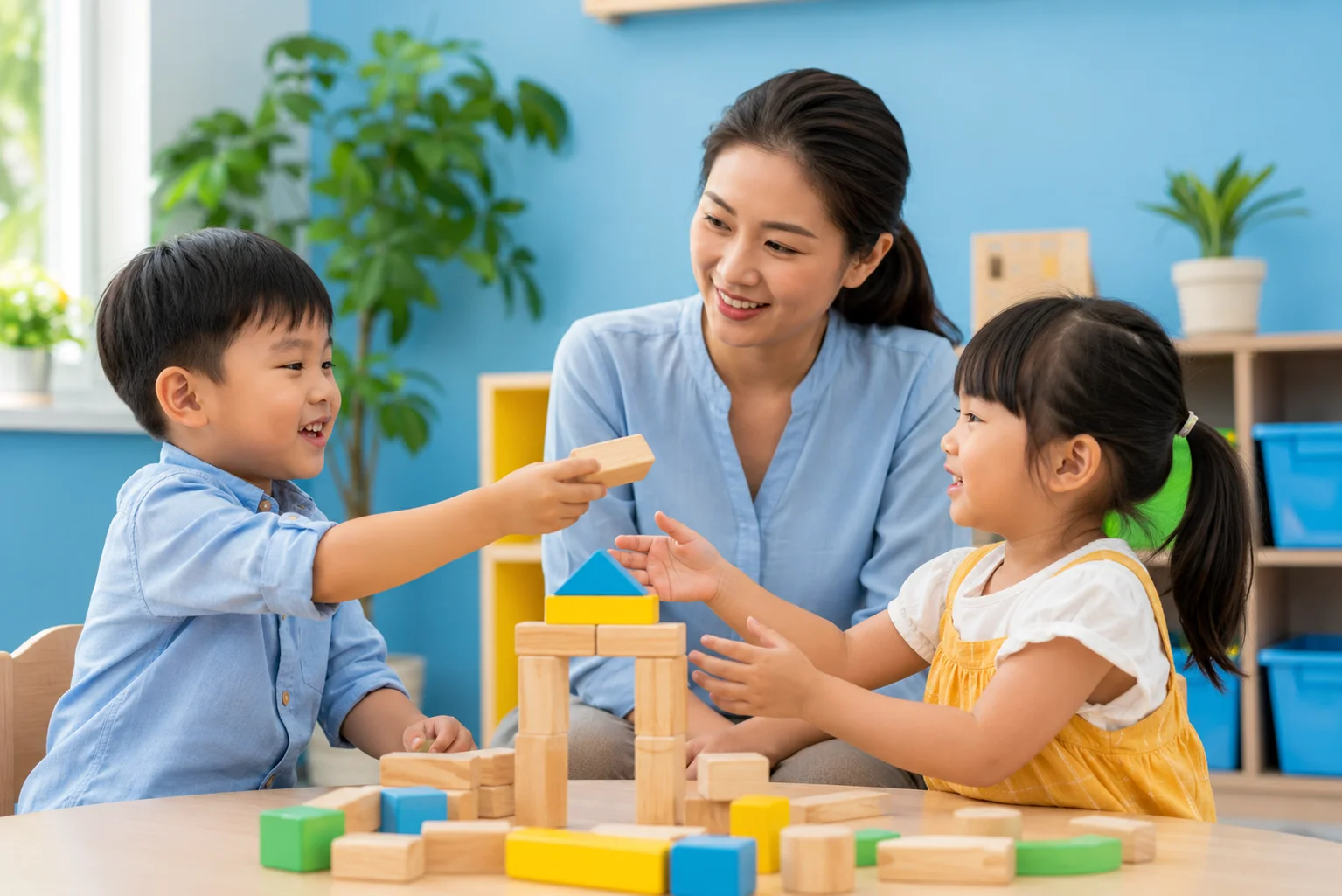
Building one tower together gives each player a clear turn and a shared task. Place a small group of blocks between you, then add one block at a time.
You might say:
Choose one block.
Now it is your turn to add a piece.
If the tower falls, laugh together, rebuild it, and begin again.
Simple learning activities, including building with blocks, can give your child short chances to choose materials, wait, and complete part of an activity with someone else.
Let your child make choices about the blocks or where they should go. The tower does not need to look perfect. The shared experience is more important than the finished result.
3. Add Puzzle Pieces One at a Time
A simple puzzle can help your child practice waiting while another person chooses or places a piece. Put the puzzle between you and take turns selecting one piece at a time.
The game does not need to end with the full puzzle completed. Your child can practice:
- Passing a puzzle piece
- Waiting while another person places a piece
- Asking for help
- Choosing which piece should be used next
Choose a puzzle that is easy enough to keep the focus on taking turns. A puzzle with large pieces and clear pictures may be easier for a young child to handle.
You can also let your child choose which piece you place next. This gives both players a role and keeps the activity moving without making the rules too complicated.
4. Pass an Object While Music Plays
Passing a safe object while music plays gives children a playful way to wait, listen, and respond to a shared cue. Use a soft toy, scarf, or another item that is easy to hold.
Start the music and pass the object back and forth. When the music stops, the person holding it can:
- Name the item
- Make a sound
- Choose the next action
Keep the rules simple and the waiting time short. If several children are playing, begin with a small group so everyone gets a turn without waiting too long.
The activity can also work without music. You can count slowly, sing a short song, or say each person’s name as the object is passed.
5. Sort or Match Items Together
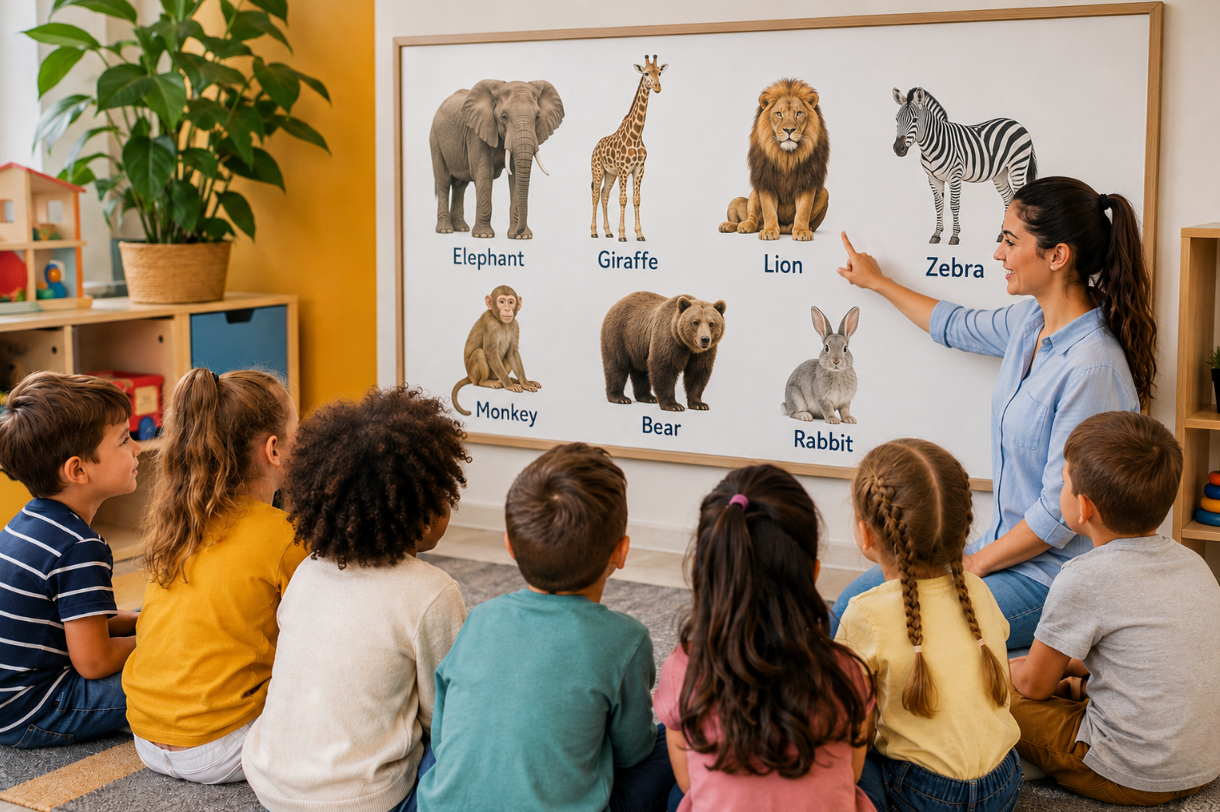
Sorting or matching items together gives your child another way to share materials and take turns. Use safe objects such as socks, blocks, picture cards, or toy animals.
Place the items in the middle and take turns choosing one. You might:
- Sort objects by color
- Match pairs
- Place similar objects together
- Take turns choosing and placing each item
The activity does not need to be completed perfectly. If your child places an item in a different group, ask what they noticed and continue playing.
You can also give each person a simple role. One person may choose the item while the other places it in the group. Switch roles after a few turns so your child can practice both parts.
When Waiting or Sharing Feels Difficult
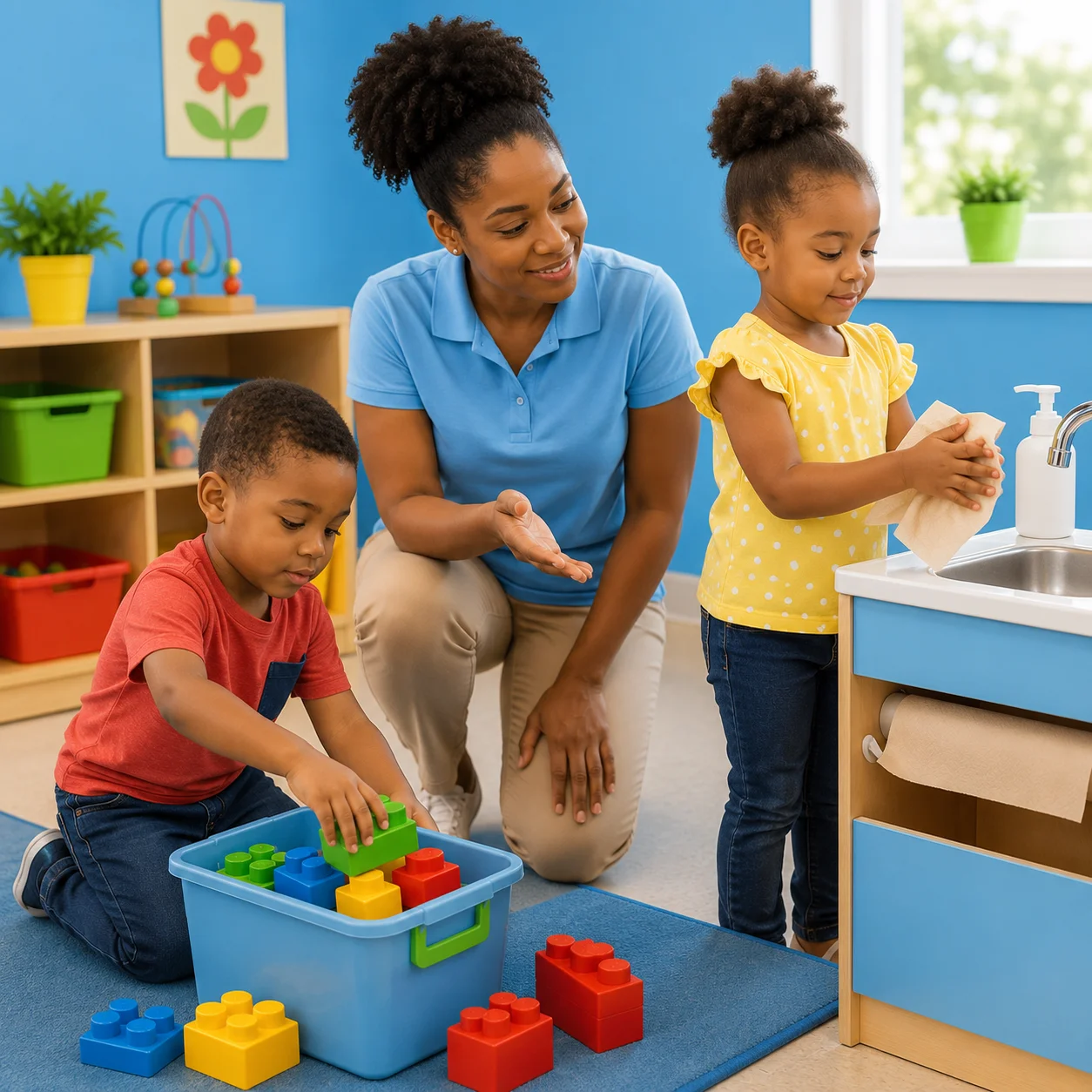
Young children may need time and support while learning to wait or share materials. Keep turns short, use one clear reminder, and give your child a little time to respond.
At Gwen’s Little Treasures Childcare, we understand that children may need repeated chances to practice these skills. Adults can support them by:
- Naming whose turn it is
- Showing what happens next
- Keeping waiting periods short
- Offering another activity while a child waits
Start with materials that are easy to share. A group of blocks or puzzle pieces may work better than asking your child to hand over a favorite toy right away.
When you are choosing a childcare provider, you may want to ask how children receive support when waiting, sharing, or joining group play feels difficult.
Practicing the Same Games at Home
Choose one game at a time and keep the activity short enough to stay enjoyable. You can play again later when your child is ready for another turn.
Use the same simple phrases during each game:
Your turn.
Now it is my turn.
Let’s build it together.
You can choose the next piece.
You can also describe what your child did instead of using broad praise. Try saying:
You waited for the ball.
You passed the block when it was my turn.
You chose the next puzzle piece.
You waited while your friend had a turn.
If a game starts to feel too difficult, simplify it. Use fewer pieces, shorten the wait, or play with only two people. Small changes can make the activity easier to enjoy.
Small Games Give Children Time to Practice
Sharing and taking turns become more familiar through short, repeated experiences with support from adults. Your child may need more guidance on one day and less on another. Each game still offers another chance to wait, pass, choose, and take part.
If you would like to know more about the games and group activities at Gwen’s Little Treasures Childcare, you can get in touch with us so our staff can explain the kinds of activities your child may take part in during the day.
Leave a Reply