


Daily routines matter for young children because familiar patterns can help them understand what usually happens next.
Regular times for play, meals, cleanup, rest, and transitions may make the day easier to follow and give children repeated chances to practice everyday habits.
Young children can still take part in different activities while following a familiar routine. This may help your child move from one activity to another because each part of the day begins to feel easier to recognize.
Daily routines may look different depending on the type of care a child receives. At Gwen’s Little Treasures Childcare, we offer several options that support different parts of a child’s day. You can review our childcare programs to learn more about the care we provide.
Routines Help Children Understand the Day
A familiar routine gives children a clearer idea of how the day usually moves. When arrival, play, meals, rest, and departure follow a regular order, your child may begin to understand what happens before and after each part of the day.
Routines can leave room for changes, different activities, and the needs of each child. The day simply has enough structure to help children follow along without requiring every activity to happen at the same time.
When you are choosing a childcare provider, asking about the daily routine can help you understand how the following parts of the day are usually handled:
- Arrival and departure
- Meals and snacks
- Play and learning activities
- Cleanup
- Rest or quiet time
- Transitions between activities
You may also want to ask whether routines change based on age or program. Clear answers can help you picture your child’s day and decide whether the setting may work well for your family.
Familiar Steps Can Make Transitions Easier
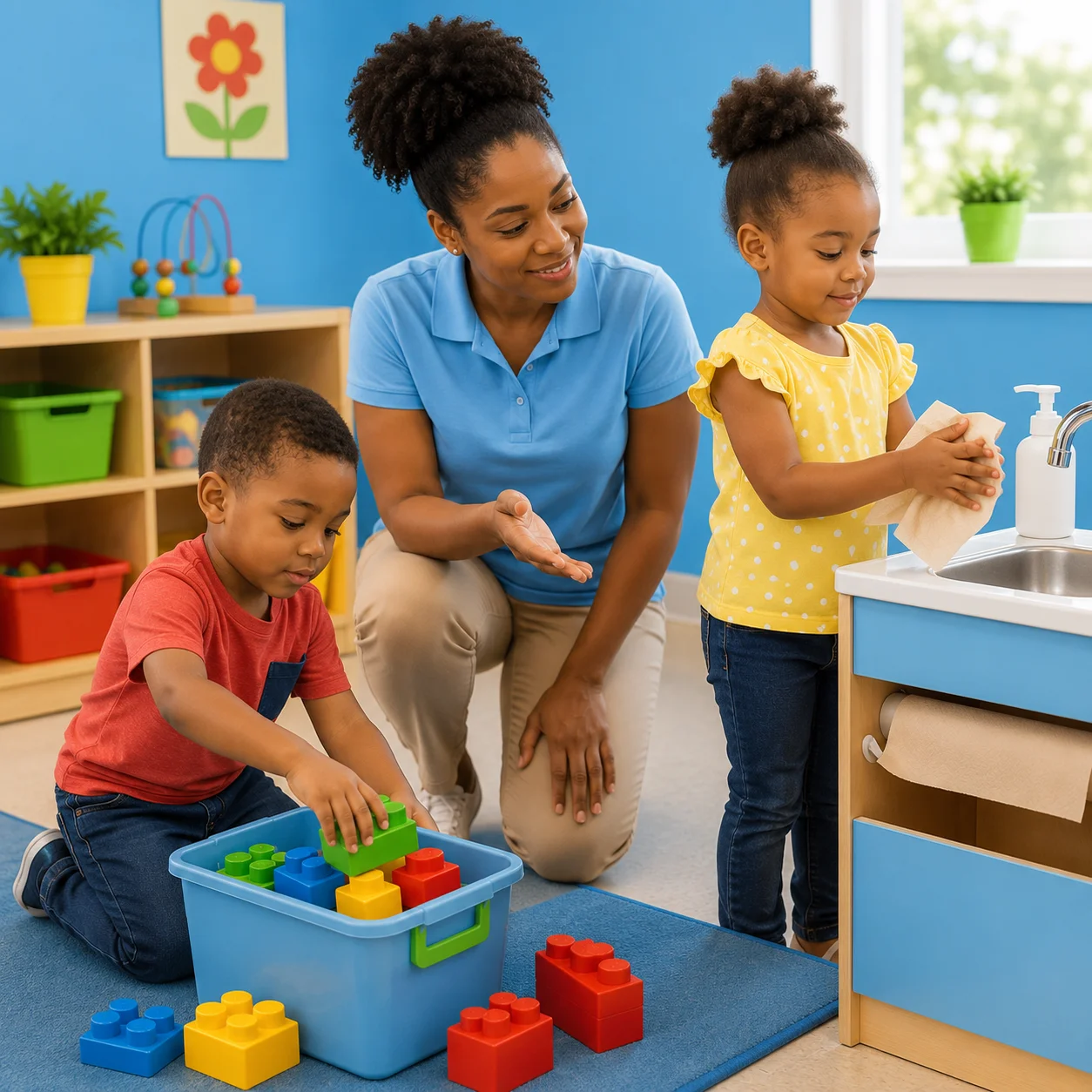
Familiar steps can make it easier for young children to move from one part of the day to another. Going from play to cleanup, washing hands before eating, or getting ready for quiet time may feel easier when children know what usually comes next.
Simple reminders can support these moments. A child may hear that cleanup comes before lunch or that story time happens before rest. After hearing the same reminders over time, children may begin to recognize the order on their own.
Some children adjust to transitions quickly, while others need more time. Calm guidance, repetition, and clear language may help your child prepare for the next activity at a comfortable pace.
You can use the same approach at home. Saying, First we clean up, then we eat,
may be easier for a young child to follow than a long explanation about everything that will happen later.
Routines Give Children Time to Practice Everyday Habits
Repeated routines give children chances to practice simple daily tasks. These may include:
- Putting away personal belongings
- Helping clean up toys and materials
- Washing their hands
- Sitting with others during meals
- Preparing for rest or quiet time
- Getting ready for the next activity
At Gwen’s Little Treasures Childcare, our staff may guide children through familiar steps such as cleaning up, washing their hands, and preparing for meals. These repeated moments allow children to practice without expecting them to complete every task on their own.
Mealtimes can also become familiar parts of the day. Children may begin to notice what happens before and after eating, including washing their hands, sitting with others, and helping clean up.
Play and learning activities can follow simple routines too. Your child may become familiar with choosing materials, listening to directions, working near other children, and putting items away when an activity ends.
Practice matters more than getting everything right the first time. Your child may need reminders, extra time, or help with the same task on different days. A routine simply gives your child another chance to try.
Home and Childcare Routines Can Work Together
Home and childcare routines do not need to match exactly. A few familiar habits can still help your child connect what happens at home with what happens during childcare.
You might use the same goodbye phrase each morning, talk about what happens after drop-off, or keep a regular bedtime when practical. Cleanup habits at home can also make similar steps feel more familiar in another setting.
A practical first day checklist for childcare can help you prepare familiar items and talk with your child about what to expect.
Keep the conversation simple. Instead of explaining the entire day at once, mention the next one or two steps. For example, you might say, First we will get ready, then we will go to childcare.
Short instructions may be easier for a young child to follow.
You can also ask which parts of the childcare routine feel easiest for your child and which transitions may need more support. This can help you practice a few familiar habits at home without trying to copy the full childcare schedule.
Frequently Asked Questions
Why do routines help young children feel more comfortable?
Familiar routines may help children know what usually happens next. Meals, play, cleanup, and rest may feel easier to follow when they happen in a regular order.
What happens when a routine changes?
Routines can stay flexible. A calm explanation and a simple reminder about what will happen next may help your child follow a change in the usual plan.
How can I support my child’s childcare routine at home?
Use a few familiar habits, such as a regular goodbye, simple cleanup steps, and short conversations about the next day. Your home schedule does not need to match the childcare routine exactly.
A Familiar Routine Can Support the Day
Daily routines can help young children understand how the day moves while giving them repeated chances to practice simple habits. The routine only needs enough consistency to make meals, play, rest, and transitions easier to recognize.
If you have questions about the routines or programs at Gwen’s Little Treasures Childcare, you can get in touch with us, and we can help you understand what your child’s day at our center may look like.



Leave a Reply