


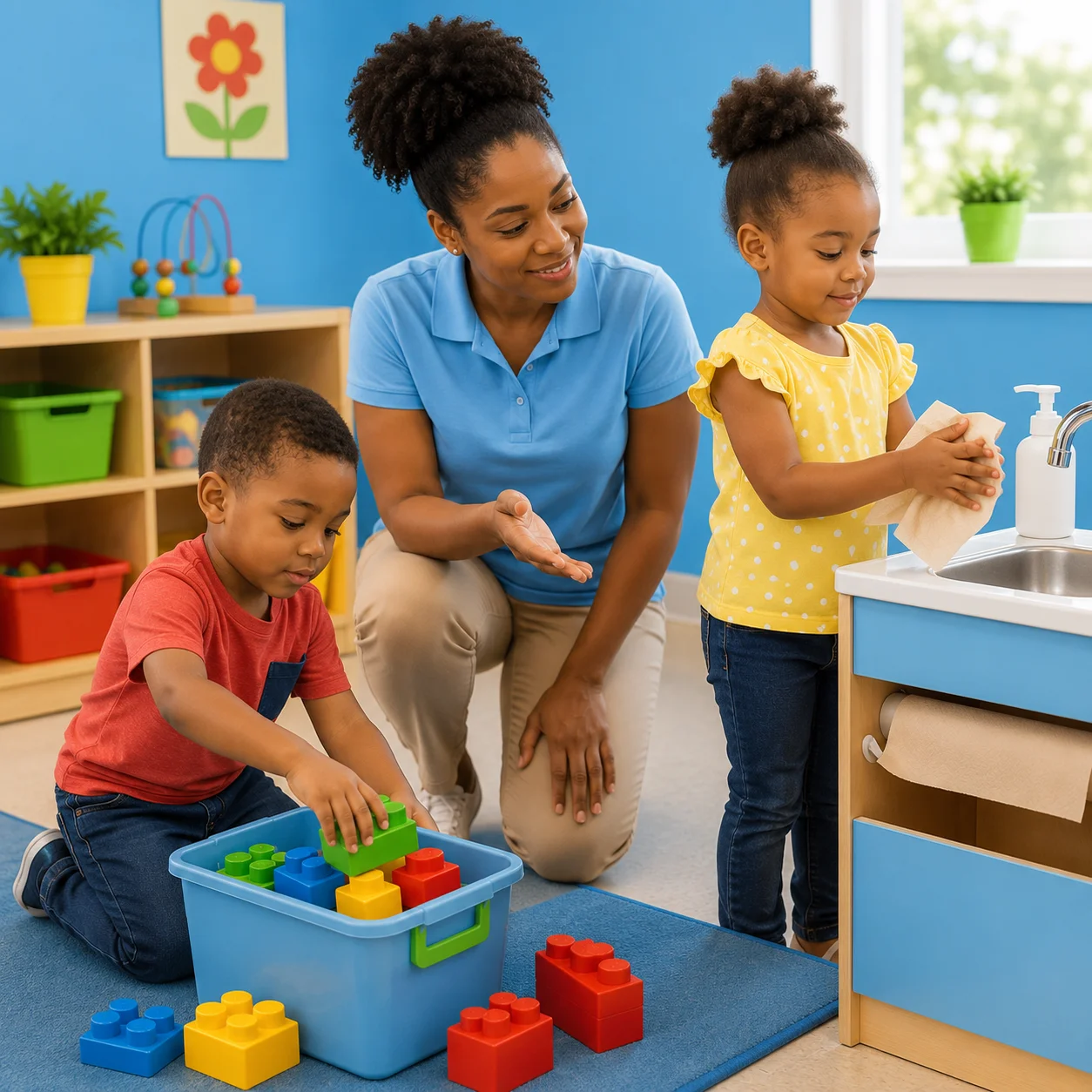
Young children can practice good habits in childcare through everyday routines such as washing their hands, cleaning up, listening, taking turns, and asking for help. Regular practice and simple guidance may help these actions become more familiar over time.
Your child will still need reminders and support. Some habits may feel easy on one day and harder on another. The purpose is to give your child repeated chances to practice, not to expect every task to be done perfectly.
At Gwen’s Little Treasures Childcare, our programs are planned around the different needs of children in our care. You can look through our childcare programs to see the care options we offer.
1. Washing Hands
Regular handwashing gives children repeated chances to become familiar with a basic daily habit. Your child may practice washing before meals, after certain activities, or whenever their hands need to be cleaned.
Young children may need help remembering each step. A simple handwashing routine might include:
- Turning on the water
- Using soap
- Rubbing both hands together
- Rinsing their hands
- Drying their hands
Short reminders can make the steps easier to follow. Your child may not complete the routine alone every time, but regular practice can make each part feel more familiar.
2. Putting Belongings in the Right Place
Putting belongings in a familiar place can help your child practice taking care of simple personal items. A coat, bag, pair of shoes, or lunch container may have a regular spot during the day.
Your child may need a reminder about where an item belongs, especially in a new setting. Clear directions such as Put your bag here
may be easier to follow than several instructions given at once.
At home, you can use a similar habit by giving shoes, toys, or clothing a regular place. The home and childcare routines do not need to match exactly.
3. Cleaning Up Toys and Materials
Cleanup can become a small and manageable part of play. Your child may help:
- Return blocks to a storage bin
- Put crayons away
- Carry books back to a shelf
- Clear materials after an activity
Simple learning activities, such as building, drawing, and sorting, can also give your child chances to use materials and help put them away when the activity ends.
Giving one cleanup direction at a time can make the task easier to understand. Instead of asking your child to clean the entire area, you might begin with, Please put the blocks in the bin.
4. Listening to Simple Instructions
Short instructions may be easier for young children to follow than several directions given together. A child may be asked to wash their hands, place a cup on the table, or put one item away.
At Gwen’s Little Treasures Childcare, our staff may use short reminders and familiar steps to help children follow parts of the daily routine. Children may still need extra time, repeated directions, or help completing a task.
When you are choosing a childcare provider, you may want to ask how daily routines give children opportunities to practice simple habits with support from staff.
5. Taking Turns
Taking turns requires patience and repeated practice. Your child may:
- Wait for a toy
- Pass materials during an activity
- Take a turn during a game
- Choose something else while waiting
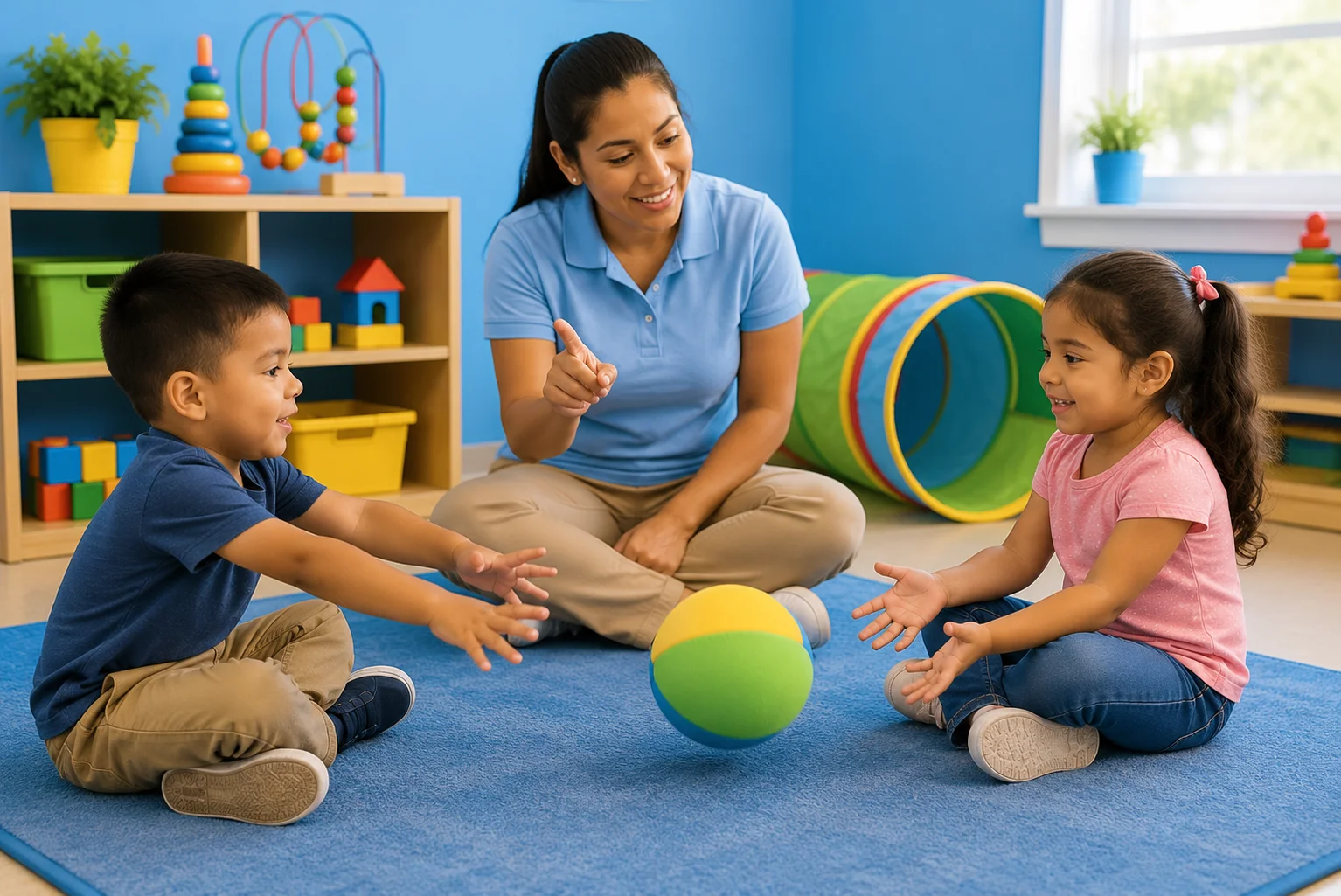
Young children may not always understand why they need to wait. Calm reminders can help explain whose turn it is and what your child can do next.
The waiting period should also match what a young child can reasonably manage. Your child may still need support when the wait feels difficult or when two children want the same item.
6. Using Kind Words
Kind words give children simple ways to communicate during play and group activities. Your child may practice saying:
Can I play too?
May I have a turn?
Thank you.
Using kind words is one of the ways children learn to socialize during play and group activities. These phrases may help your child ask for something, respond to another child, or explain a need.
Children may still disagree or become upset. Words are tools they can practice, not a promise that every interaction will be easy.
7. Asking for Help
Asking for help is also a useful habit. Your child does not need to manage every task or problem alone.
Help may be needed when your child is:
- Opening an item
- Finding a belonging
- Joining an activity
- Explaining that something is wrong
- Completing a task that feels difficult
Adults can make this easier by showing children simple phrases such as, Can you help me?
or I need help.
Your child may also use gestures or point to what is needed before the words become familiar. Knowing when to ask for help is part of learning how to take part in daily routines safely and comfortably.
Practicing the Same Habits at Home
You can support these habits through simple routines at home. Your child might wash their hands before meals, put toys away after play, use kind words, or carry a lightweight item to its usual place.
Choose one or two habits at a time instead of working on everything at once. Short reminders and regular practice may be easier for your child to follow.
Notice the effort without expecting perfection. You might say:
You put the crayons back.
You remembered to ask for help.
You waited for your turn.
You washed your hands before eating.
Clear feedback shows your child which action was noticed.
Small Habits Take Time
Good habits become more familiar through repeated chances to practice. Your child may need reminders, guidance, and help on different days, even after completing the same task before.
If you have questions about how children may practice these habits at Gwen’s Little Treasures Childcare, you can contact us so our staff can explain how simple habits fit into the daily routine.



Leave a Reply