


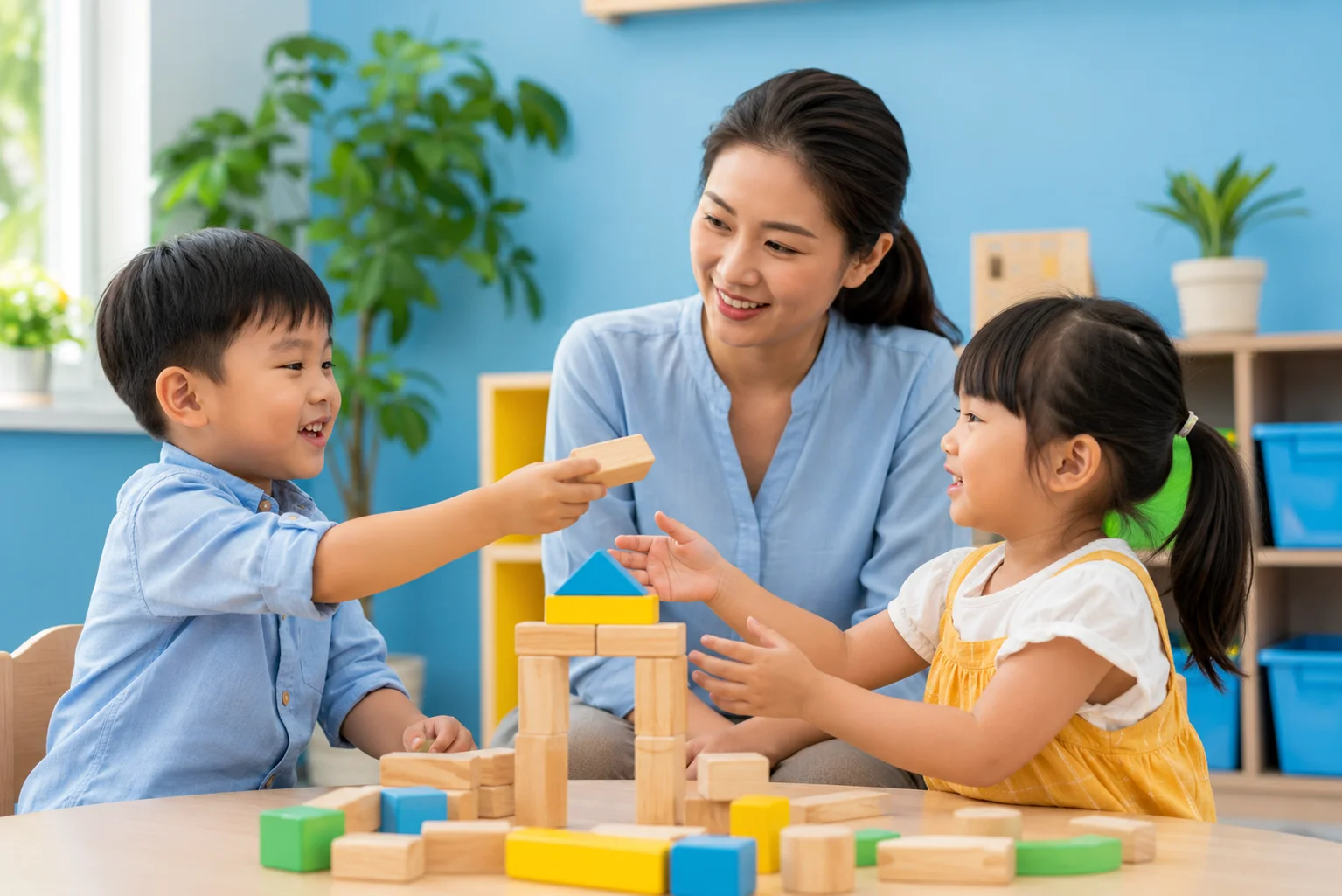
Children learn to socialize in childcare by spending regular time with other children, joining shared activities, and practicing simple communication.
Through play, routines, and gentle support from staff, your child can begin learning how to share, take turns, express needs, and feel more comfortable around others.
Social growth often happens in small steps. Your child may first watch other children, play nearby, respond to a greeting, or join an activity briefly. These moments give your child time to observe the group and participate when ready.
At Gwen’s Little Treasures Childcare, we understand that children do not all socialize in the same way or at the same pace. Some enjoy group activities right away, while others need more time to listen, watch, and become familiar with the people around them.
If you would like to see how children spend time together, join activities, and become familiar with the childcare setting, you may
schedule a tour
of our center.
What Socializing Can Look Like in Childcare
Socializing does not always mean talking constantly or joining a large group. It may begin with playing beside another child, handing over a toy, smiling during a song, or asking our staff for help.
Playing near other children gives your child a chance to notice how others communicate. Your child may see someone ask for a turn, invite another child to play, or use words to solve a small problem.
Watching can also be part of learning. A child who stands nearby may be listening to a game or deciding when it feels comfortable to join. Quiet participation should not automatically be treated as a problem.
How Children Practice Communication With Others
Regular peer interaction gives children natural opportunities to speak, listen, and respond. During play, your child may ask to use a toy, explain what they are building, or say when they do not like something.
Communication also includes noticing another child’s words and actions. Your child may begin to recognize when someone wants space, needs help, or has a different idea.
As you are
choosing a childcare provider
,
look for a setting where children have regular opportunities to communicate, cooperate, and become comfortable around others.
Our staff can support these moments by offering clear, simple language children may use. For example, a child may be encouraged to say, Can I play too?
or I am still using this.
These phrases help children express themselves without expecting them to manage every situation alone.
How Sharing and Taking Turns Build Social Skills
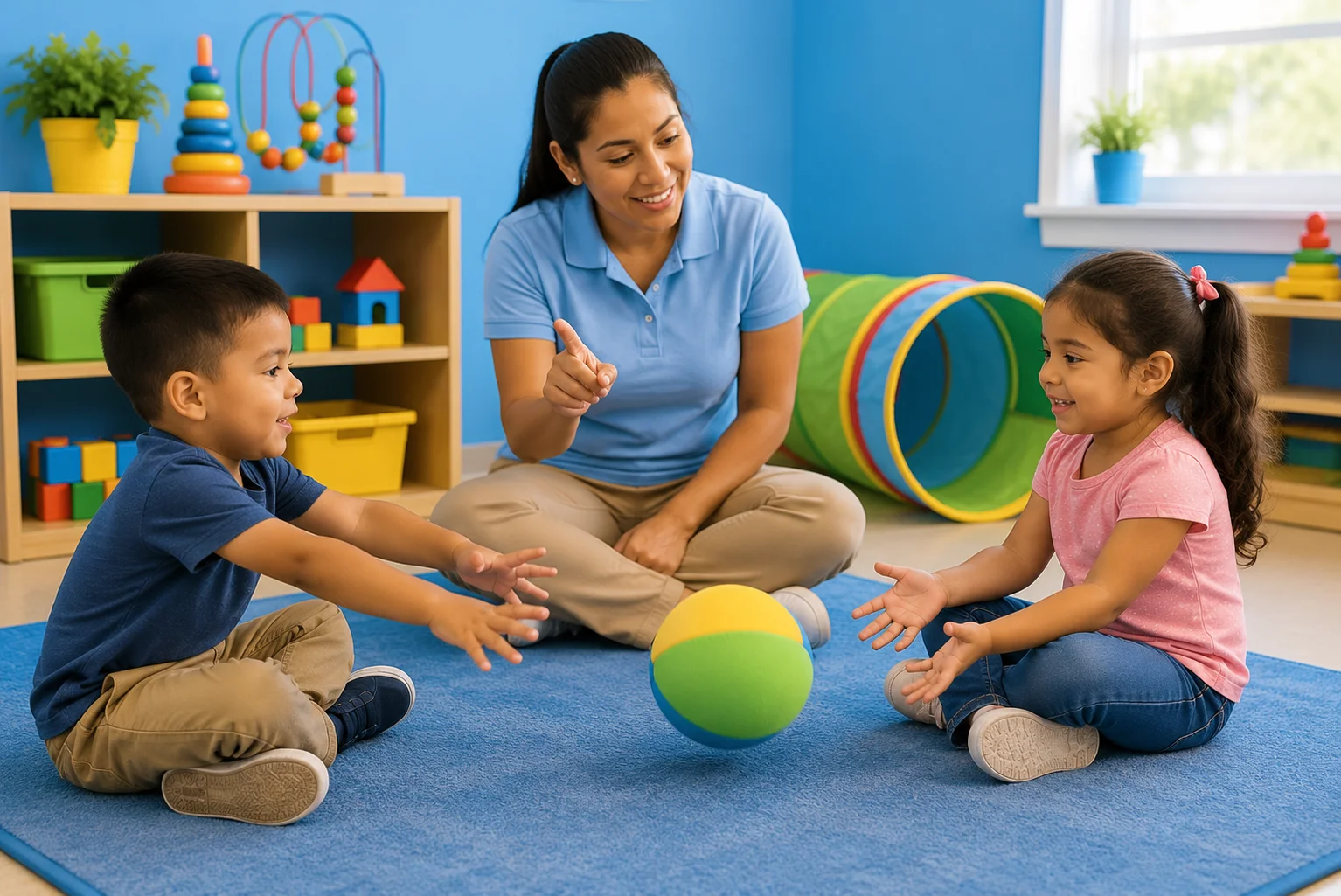
Children learn cooperation through repeated practice, not through one reminder. Everyday activities give them many chances to wait, ask, exchange materials, and try again.
Your child may wait for a toy, pass art supplies, take a turn during a game, or choose another activity while waiting. These experiences can help children understand that others have needs and ideas too.
Many
simple learning activities for children
,
including building, pretend play, music, and group art, give them natural opportunities to listen, share materials, take turns, and solve small problems together.
At Gwen’s Little Treasures Childcare, our learning environment gives children opportunities to learn and socialize with their peers. Group activities may help children practice joining in, following a shared idea, and working alongside others.
Disagreements may still happen. Two children may want the same toy or prefer different rules. With support from our staff, these moments can become chances to practice words, patience, and simple problem-solving.
How Our Staff Can Gently Support Social Learning
Our staff
can help children handle social situations by modeling calm language and showing them what they can say or do next. This support may be useful when a child feels frustrated, unsure, or left out.
Helpful phrases may include:
May I have a turn?
Can I play too?
I am still using this.
Let’s choose something else while we wait.
Please stop. I do not like that.
These phrases connect words with real situations. Our staff may also remind children to listen, wait, or try another way to join an activity.
Children do not need to respond perfectly every time. Social learning takes repetition, and your child may need several chances to practice the same skill.
How You Can Support Social Skills at Home
You can support the same skills through simple routines at home. Practice greetings during everyday outings, take turns while playing a game, or use toys to act out waiting, sharing, and asking to join.
Books about friendship can create natural conversations about feelings and choices. You might ask, What could the character say?
or How do you think the other child feels?
Specific questions may also help your child talk about the day. Instead of only asking, Did you have fun?
try asking:
Who did you play beside today?
What did you build with the other children?
These questions make small social moments easier to discuss.
Frequently Asked Questions
What if my child prefers to watch other children?
Watching can be part of becoming familiar with a group. Your child may be observing how others play before deciding to join.
Does playing beside another child count as socializing?
Yes. Playing nearby gives children opportunities to observe, communicate, exchange materials, and gradually begin interacting.
How can childcare help children practice sharing?
Shared toys, games, art materials, and group routines may give children repeated chances to wait, ask, exchange, and take turns with guidance from our staff.
Social Confidence Grows Through Small Experiences
Social confidence often develops through small, repeated experiences. Your child may begin by watching, then playing nearby, and later joining for a short time. Each step can provide more practice with communication, cooperation, and group routines.
Our staff
can help children handle social situations by modeling calm language and showing them what they can say or do next. This support may be useful when a child feels frustrated, unsure, or left out.
Leave a Reply